







Estimate dead volume and painting cost after blasting
Control your coating costs, not just your blasting parameters.
When a surface is blasted, it becomes rough. This roughness improves coating adhesion, but it also creates valleys and peaks that must be filled by the coating.
This additional coating volume is called dead volume.
The purpose of this calculator is to help estimate:
- the extra coating required due to surface roughness
- the real coating consumption
- the cost impact of blasting parameters
This tool is especially useful in industries where coating costs represent a major part of the finishing process.
Why surface roughness affects coating consumption
Blasting is used to clean and prepare surfaces before painting or coating.
During blasting, abrasive particles create a surface profile made of peaks and valleys.
This roughness is necessary because it allows the coating to anchor mechanically to the surface.
However, this rough profile also means that coating must fill the valleys before forming a uniform protective layer.
As a result:
The rougher the surface, the more coating is required.
This additional paint consumption is what we call dead volume.
What Is dead volume?
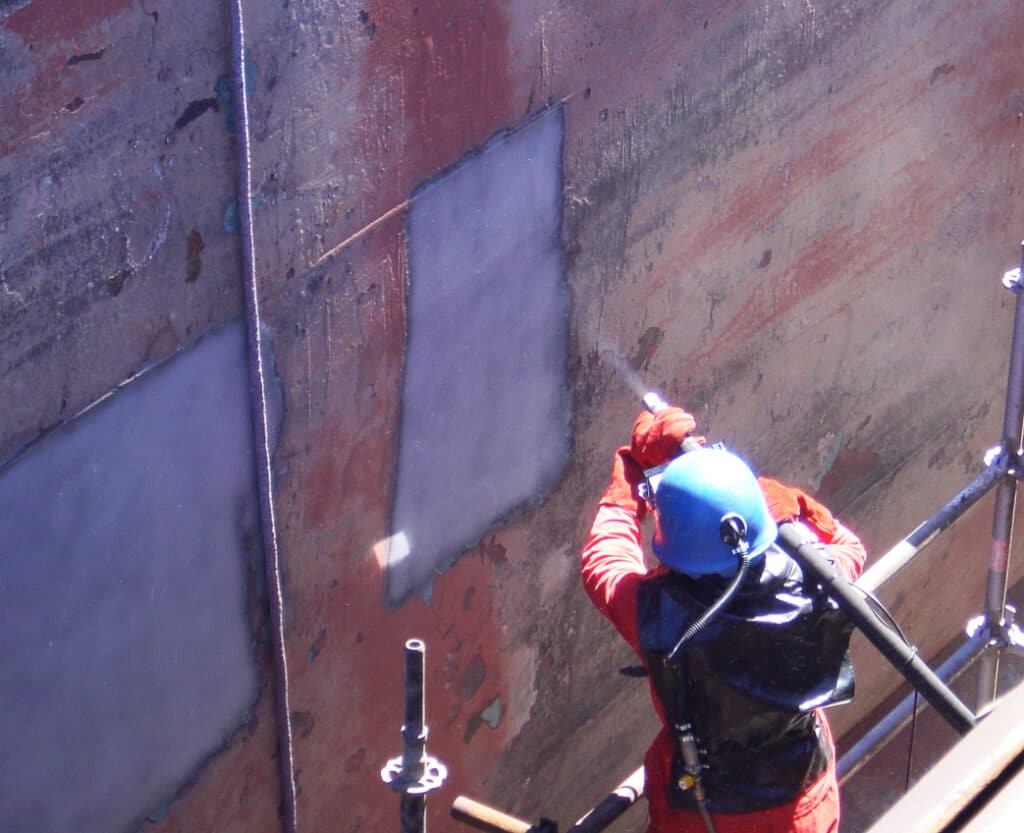
Dead volume is the extra coating volume required to fill the surface roughness created by blasting.
When a coating is applied to a blasted surface:
- The coating first fills the valleys of the surface profile
- Only after that does it create the protective coating layer
This means part of the paint applied does not contribute to the protective thickness, but is simply used to fill the surface profile.
Understanding this dead volume is essential to estimate the real coating consumption and cost.

Another important parameter when calculating coating consumption is the dry extract, also called solid content.
Most liquid coatings contain solvents or water.
For example:

water or solvent
many industrial paints contain 40-60% water or solvent

solid coating layer
only the remaining portion becomes the solid coating layer
The dry extract represents the percentage of the coating that remains on the surface after drying.
Example:
If a paint has 50% solid content, only half of the applied volume remains on the surface once the coating dries.
Some coatings, such as epoxy systems, may contain little or no water, which means their solid content is significantly higher.
Taking the dry extract into account is essential when estimating the real quantity of coating required.
Why coating cost should be evaluated together with surface preparation
In many blasting operations, the focus is often placed on the cost of the abrasive.
However, the cost of coating is usually much higher than the cost of blasting media.
If the surface roughness is too high:
- more coating will be required
- application time may increase
- coating costs rise significantly
This is why it is important to evaluate the dead volume created by blasting, rather than focusing only on abrasive cost.
Optimizing surface preparation can lead to significant savings in coating consumption.
How the coating consumption calculator works
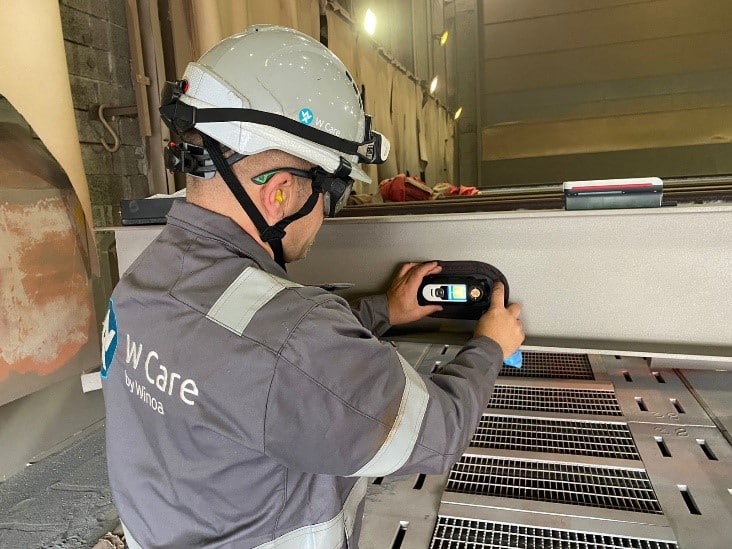
This calculator estimates the additional coating volume required to fill the surface roughness.
It takes into account several parameters such as:
- surface roughness created by blasting
- coating thickness specification
- coating solid content (dry extract)
Based on these values, the tool can estimate:
- the dead volume generated by the surface profile
- the total coating consumption
- the potential cost impact
This helps engineers and operators better understand the relationship between blasting parameters and coating consumption.
Typical applications
Dead volume calculation is particularly useful in industries where large surfaces must be coated.
Typical examples include:

Steel structures
Large welded structures such as industrial frameworks, construction equipment, heavy machinery

Pipe coating
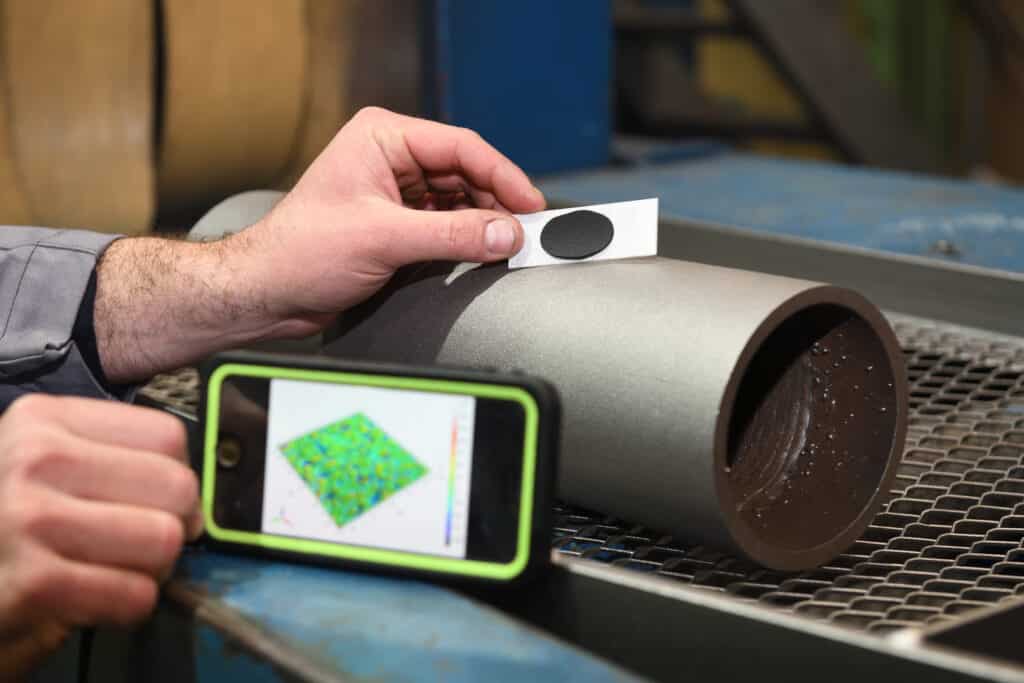
Pipelines and tubes often require precise surface preparation to ensure coating adhesion while controlling coating consumption.

Shipyards
Ship hulls and marine structures involve very large coated surfaces, where even small variations in coating consumption can represent significant costs.

Reinforced steel and infrastructure
Applications such as reinforcing bars (rebar) and structural steel used in construction also benefit from optimized coating consumption.
Why understanding dead volume helps reduce coating costs
Optimizing blasting parameters can significantly influence coating consumption.
If the surface profile is too deep:
- more coating is needed to fill the valleys
- coating cost increases
By controlling surface roughness and understanding dead volume, manufacturers can:
- reduce paint consumption
- improve coating efficiency
- control production costs
In large-scale projects, even small improvements in coating efficiency can generate substantial savings.

Use the coating consumption calculator
This calculator helps estimate the real coating consumption after blasting by considering:
- surface roughness
- coating thickness
- dry extract (solid content)
It provides a practical way to evaluate the impact of blasting parameters on coating consumption and costs.
Try the coating consumption calculator